







Search Results for: Strawberry Mochi Matcha Latte
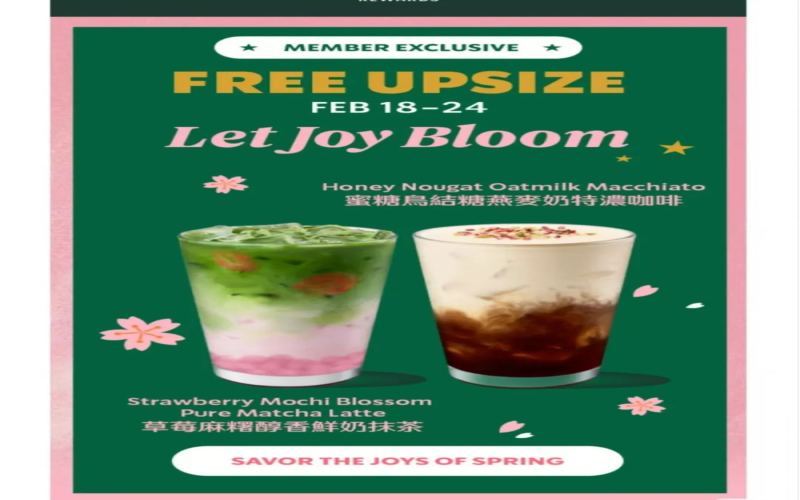
Starbucks Strawberry Mochi Matcha Latte Meets a Chilly Reception in Hong Kong and Macau: Paper Cup Presentation Falls Flat, Mochi Clogs Straws and Sparks Debate Over Texture
Spring new arrivals season: Starbucks Hong Kong and Macau stores launched a Strawberry Mochi Creamy Fresh Milk Matcha. The pink-and-green color scheme and freeze-dried strawberry garnish on the poster won over many looks-focused customers, who placed orders on impulse. However, due to Hong Kong's plastic restriction policy, cold drinks can only be served in white paper cups, creating an obvious gap between the real product and the promotional photo. Some consumers quipped that it looked like "green curry soaked chili peppers." Even more unexpectedly, although the mochi pearls were small in size, the stores did not provide wide-bore straws, so the mochi frequently clogged during drinking, leaving customers in a dilemma. As for taste, feedback was equally polarized—some found it too sweet, while others felt the matcha and strawberry flavors were almost absent. This new product was launched simultaneously in Singapore, Malaysia, and other places, with reviews almost identical to those in Hong Kong. This article compiles the real experiences of the first batch of tasters for the reference of coffee enthusiasts. [more…]
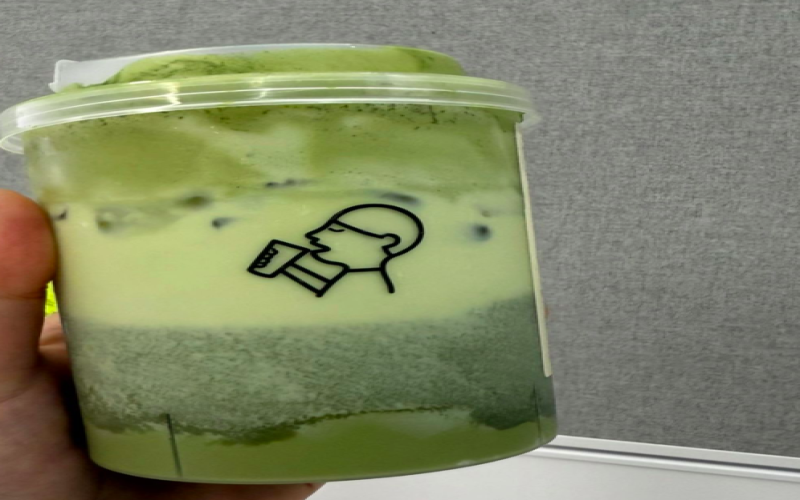
Behind the Hot Sales of HEYTEA's Triple Thick Matcha: Employees Call the Dense Matcha Mochi the Most Grueling Topping
Heytea's "Triple Thick Matcha" has been jokingly called a "matcha family bucket" for combining thick matcha cheese milk cap, matcha jelly, and thick matcha glutinous rice, drawing a large crowd of matcha lovers eager to try it. However, this hot-selling drink has become a nightmare for employees at the store level. The thick matcha glutinous rice looks like it only requires stirring matcha powder, glutinous rice flour, milk, and condensed milk into a sticky paste, but in reality it is extremely arm-tiring to make, and if you are not careful it can burn at the bottom and smoke, ruining the entire pot of topping. During peak sales, employees stir until they can no longer lift their arms, and some even hope the brand will discontinue it. At the same time, some consumers are not buying it either, complaining that the glutinous rice fills the stomach and has a gluey texture. This article examines both the employee and customer sides to break down why this drink—"hard for staff to cook, hard for customers to enjoy"—remains so controversial. [more…]
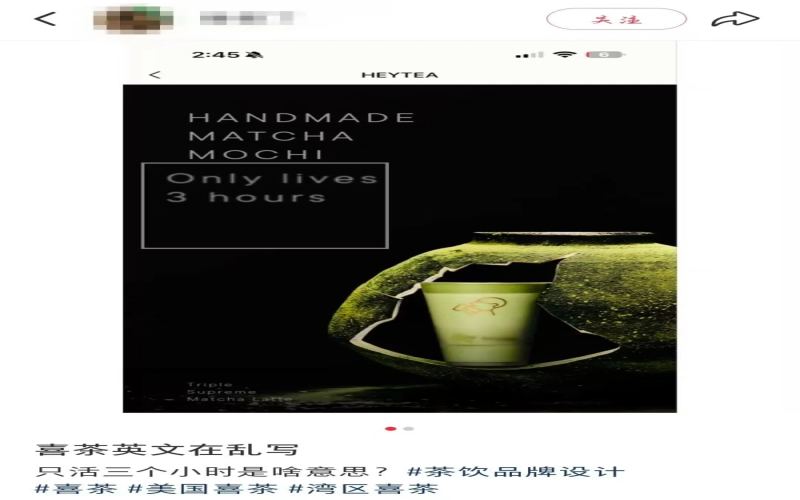
Heytea's new matcha product in the US sparks controversy over its English label—what does "only alive for 3 hours" actually mean? The official response is here.
Heytea has brought its popular matcha drink "Triple Thick Matcha" from China to the U.S. market, rolling out a limited-time buy-one-get-one-free promotion, but a small line of English text on the promotional poster—"only lives 3 hours"—sparked widespread discussion. The phrase, which literally means "only lives 3 hours," left many consumers puzzled: does it refer to the drink's optimal flavor window, the duration of the promotion, or the shelf life of the matcha mochi topping? Netizens each had their own interpretation, with some even questioning whether the brand's copywriting review process was inadequate. Hours after the controversy escalated, Heytea's official customer service contacted the original poster to explain, and the poster in question has since been corrected. This article provides a complete rundown of how the incident unfolded and the various viewpoints involved. [more…]
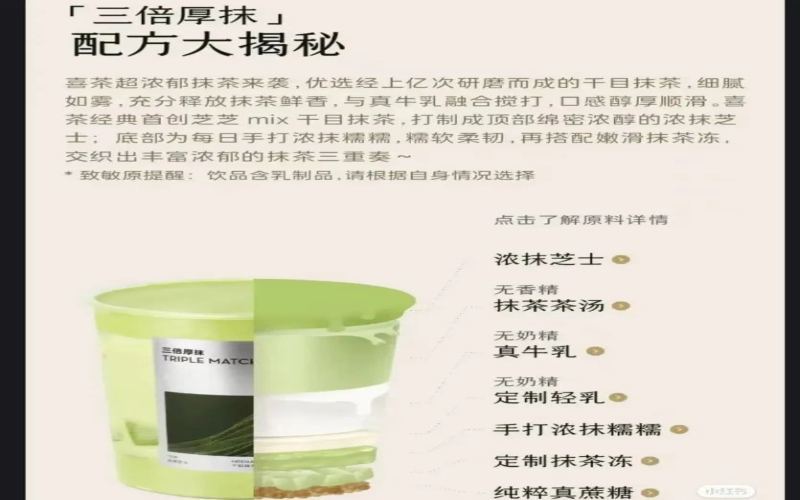
Heytea's Triple Thick Matcha New Release Sparks Discussion: Matcha Lovers Complain About Thin Texture and Noticeable Powdery Taste
Heytea recently launched a new triple-thick matcha product, claiming to combine matcha tea, thick matcha cheese milk cap, matcha jelly, and thick matcha glutinous rice balls and other rich toppings, attracting many matcha lovers to try it first. However, the first wave of feedback showed a clear gap from expectations: many consumers complained that the glutinous rice balls were runny and not chewy, even describing them as hard to swallow; the matcha drink had a heavy powdery taste, leaving the mouth dry and the throat coated after drinking; despite being called "triple-thick matcha," the tea flavor was rather weak, and even adding more intensity brought limited change. Matcha enthusiasts, after comparing the Heytea series with the rich, sweet aftertaste they idealize, gave comments such as "watery" and "thin and bland." The brand may have blended milk and syrup to cater to mass tastes, but this is far removed from the bitter depth and sweet finish pursued by seasoned matcha lovers. [more…]
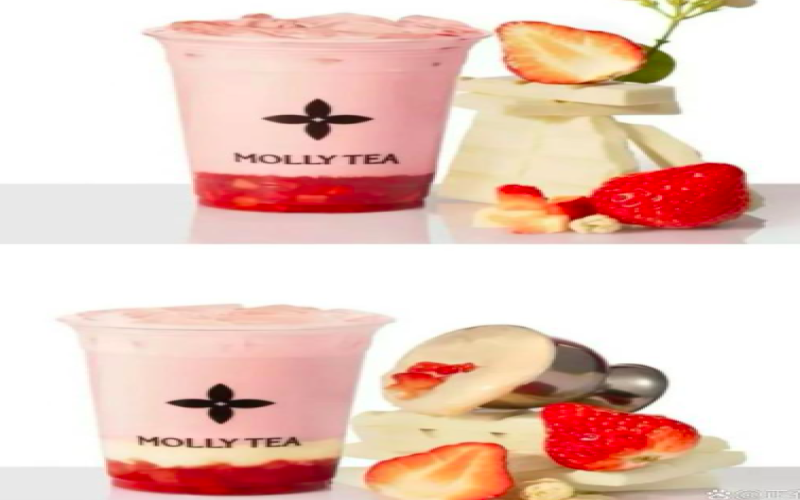
Jasmine Naibai Strawberry New Product Fails to Match Promotion, Consumers Question Inconsistency Between Description and Reality
The limited-edition drinks "Strawberry White Chocolate" and "Strawberry White Chocolate Rice Mochi," launched in collaboration between Molly Tea and *Barbie*, sparked consumer complaints due to a massive discrepancy between the actual product and the official promotional images. The promotional image showed a thick layer of strawberry chunks filling the bottom of the cup, but the drinks customers actually received contained so little fruit that it was barely noticeable. Some customers strained out the fruit with a sieve and put it back into the cup, only to find the actual portion fell far short of the poster. The store explained that, because customers had complained the fruit pieces were too large and hard to sip, the strawberries had been mashed, and that shaking during delivery would also cause the fruit to mix with the liquid. However, the official promotional image carried no disclaimer such as "actual product may vary," leading consumers to suspect false advertising and demand refunds. Reporters from this publication visited two stores in Wuhan, placed orders, and conducted hands-on tests, confirming that the actual product indeed did not match the promotion. [more…]
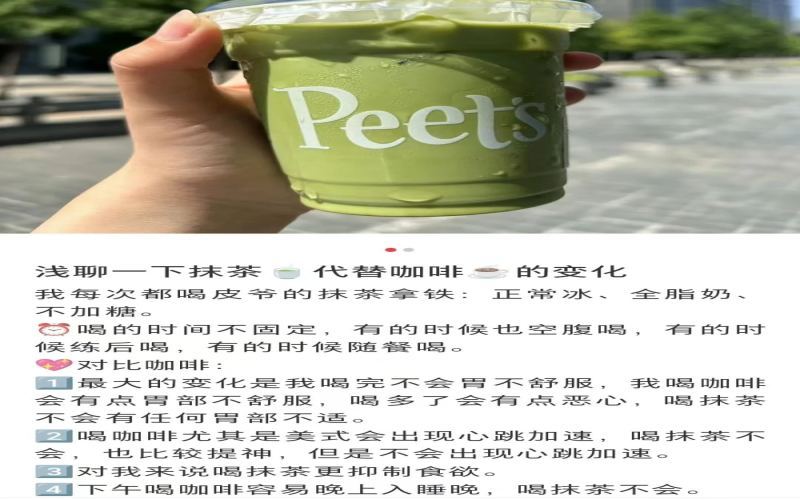
Peet's Matcha Latte Praised as a Weight-Loss Miracle? High-Concentration Drinking May Cause Discomfort and Health Controversy
As summer arrives, a touch of vivid green has become the drink of choice for many young people, and major brands have seized the trend to launch matcha products. Amid this craze, Peet's matcha latte has unexpectedly gone viral for its rich taste, and many matcha lovers call it a "weight-loss miracle," citing its ability to effectively suppress appetite. Yet real consumer feedback is polarized: some feel no hunger all day, while others find their appetite sharpened after drinking it, or even experience nausea and queasiness. Does matcha actually suppress appetite? Is drinking it at high concentrations truly healthy? This article discusses the ingredients, consumer experiences, and health risks from multiple angles to help coffee and matcha lovers view this internet-famous drink rationally. [more…]
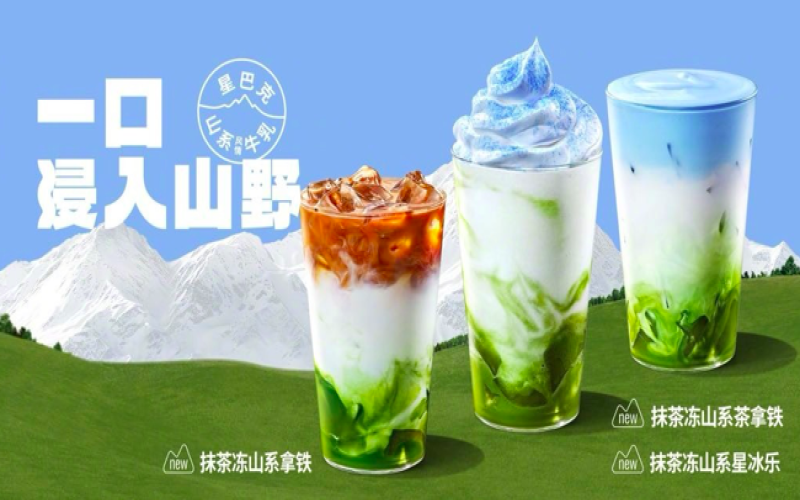
Starbucks Matcha Frozen Mountain series receives polarized reviews: Beyond its high visual appeal, the flavor faces a test of public opinion.
This summer, after brands like Luckin and Manner rolled out matcha drinks one after another, Starbucks also jumped on the trend and launched a Matcha Frozen Mountain series, including a latte, a tea latte, and a Frappuccino. In official promotions, the tea latte is described as featuring a matcha jelly base, paired with mountain-style milk and a blueberry powder cloud milk cap, blending the imagery of blue skies, white clouds, and green meadows into a single cup and successfully winning over looks-focused fans. However, after the product launched, many consumers on social platforms reported that the drink was too sweet and had a strange grassy scent, with some describing it as "sugared grass" or a "weakened version of Iced Matcha," and some discarded it after taking a photo and only a sip. At the same time, Starbucks employees also frequently made mistakes because the names of the latte and the tea latte were too similar, leading to an increase in complaints. This article will sort out the market reaction and the main points of controversy surrounding this new product. [more…]
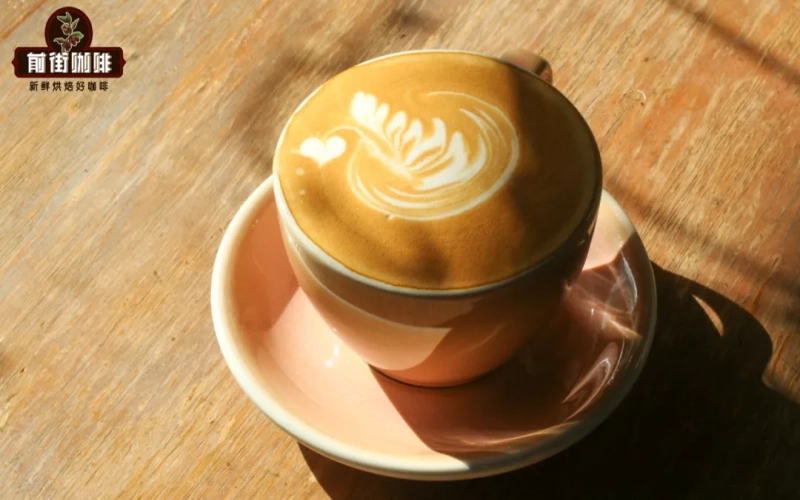
Why Does Matcha Latte Contain No Coffee? Interpreting the Original Meaning of Latte and the Evolution of Latte Coffee
Many people have had the experience of ordering a matcha latte at a coffee shop, only to find that it contains no coffee at all. Why is it called a latte if it doesn't contain coffee? What exactly does the word latte mean? To answer these questions, we need to turn our attention back to the Italian word Latte, tracing the semantic shift of this term from milk to milk coffee, and how it acquired new meanings as Italian-style coffee spread around the world. This article will start with the etymology of Latte, trace the story of how latte coffee was born in the United States, and explain why coffee shops are so eager to use latte to name drinks that contain no coffee, helping you avoid confusion the next time you face a menu. [more…]
Must a latte contain coffee? Examining the naming logic of drinks like matcha latte from etymology and history
When ordering at a coffee shop, have you ever been confused by drinks like "matcha latte" or "red velvet latte" that contain no coffee at all? The name says "latte," yet what you get is a pure milk drink. Behind this lies an interesting story about language, history, and the spread of coffee culture. This article starts from two questions that Front Street Coffee is often asked—why do some lattes contain no coffee? And if they contain no coffee, why are they still called lattes?—to trace the evolution of the word "Latte" from its meaning of "milk" in Italian to its current conventional use as shorthand for "milk coffee," and to analyze the logic behind how coffee shops name coffee-free drinks. Whether you are a coffee enthusiast just getting started or a consumer trying to make sense of the menu's mysteries, this article will help you sort things out so you won't be confused the next time you order. [more…]
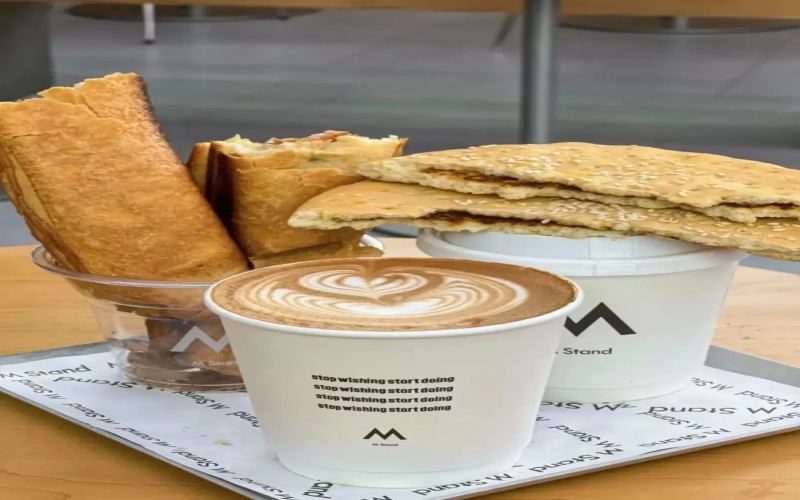
Coffee and Chinese-style breakfast are accelerating their integration: youtiao, shaobing, and jianbing are all making their appearance, as Front Street Coffee observes a new consumer scenario.
The pairing of coffee with Chinese-style breakfasts is rapidly expanding across the country. M Stand recently launched a coffee set featuring youtiao croissants and beef shaobing, a Shanghai jianbing guozi coffee shop once had people queuing for over an hour, and in Ningbo, Chaozhou, Kunming, Jingdezhen, Shantou, Guangzhou, and other places, combinations such as cifantuan, wumiguo, meigancai pork patty, youtiao with mochi, Chaoshan rice noodle rolls, and even beef offal rice with coffee have emerged. Data from Ele.me and Koubei Life Network in 2021 shows that the top two breakfast preferences of Shanghai residents are soy milk and coffee, and coffee has entered the ranks of the most popular breakfasts in multiple regions. This article reviews typical examples of this trend and retains relevant recommendations from Front Street Coffee for coffee enthusiasts' reference. [more…]

Peet's Hojicha Latte New Release Sparks Controversy: Dark Appearance Criticized, Powdery Bitterness Called Poor Value for Money
Peet's Coffee recently launched a new hojicha series—Hojicha Latte and Lucky Hojicha Latte. Originally expected to ride the momentum of its matcha latte, the drinks instead sparked widespread discussion among consumers over their appearance and taste. Some netizens bluntly said the dark, paste-like look was a "turn-off," and that the visual appeal dropped once the lid was opened; on taste, feedback also pointed to a heavy powdery texture and pronounced bitterness. Although some consumers familiar with hojicha processing explained that the dark color is normal, the controversy still centered on whether the thirty-plus yuan price tag matches the quality. This article compiles feedback from various sides and retains relevant Front Street Coffee recommendations for coffee enthusiasts' reference. [more…]
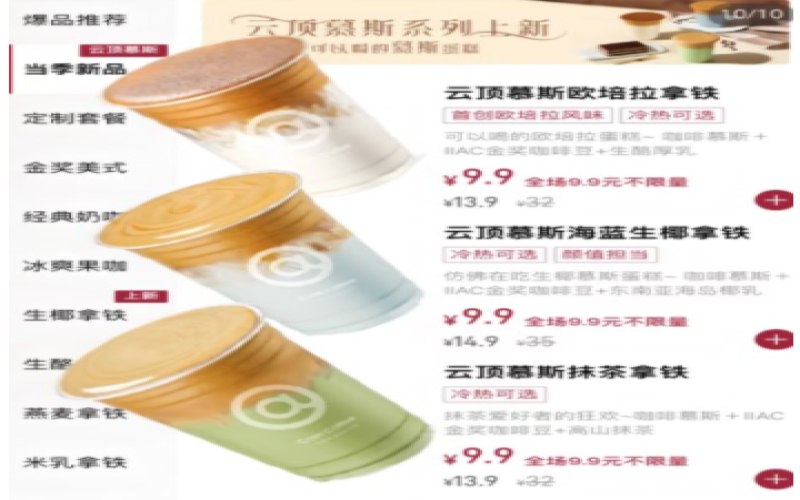
Cotti Cloud Top Mousse series launches at 9.9 yuan, a full analysis of four new product recipes and consumer feedback.
Cotti Coffee recently launched its Cloud Top Mousse series nationwide, with all three new drinks priced at 9.9 yuan. The series uses IIAC Gold Award coffee beans and features three flavors: Opera Latte, Sea Blue Coconut Latte, and Matcha Latte. The brand also collaborated with Gucci collaborating illustrator Jayde Fish to launch co-branded merchandise and held review campaigns on social media. However, after launch, many consumers reported that the mousse topping portion was on the small side, and some even questioned whether the coffee liquid was missing. In response to these issues, store staff gave a response. This article will comprehensively sort through the new product information, flavor characteristics, and market feedback, and attach Front Street Coffee's professional perspective. [more…]
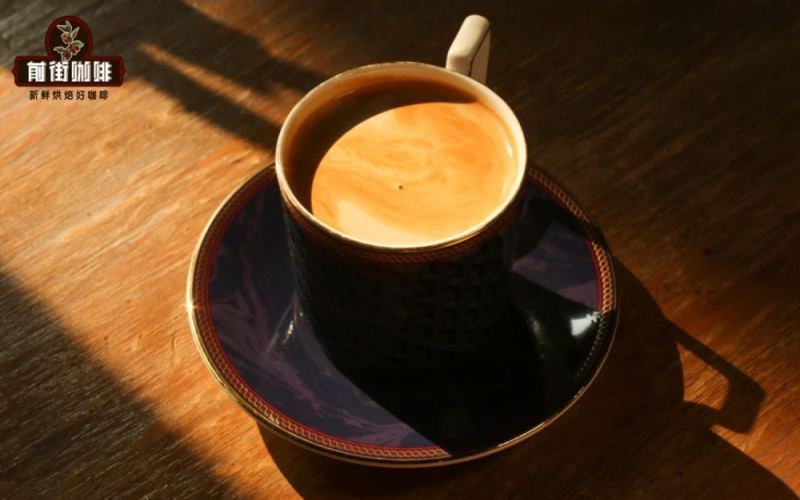
Green Tea Coffee Making Method and Detailed Steps, Including Flavor Latte Pairing Suggestions
Many people can't get used to the bitterness of coffee, so coffee shops often offer a variety of flavored lattes, providing more options for those who dislike bitterness. However, occasionally a drink and its name don't match up—the most common case being ordering a matcha latte and getting something with no coffee at all. This article will introduce the specific method and steps for making green tea coffee, while also clarifying the difference between a matcha latte and its caffeinated version, and will retain product recommendations related to the Front Street brand for coffee enthusiasts' reference. [more…]
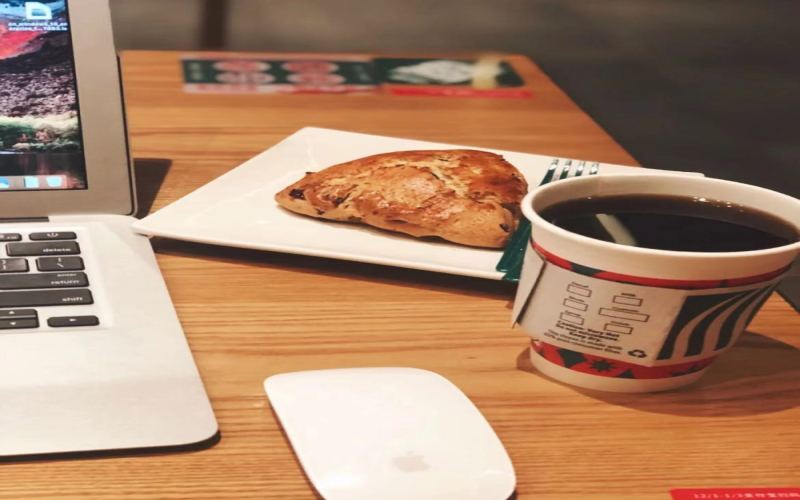
How to Order Starbucks Drinks to Taste Even Better? Top Ten Must-Order Recommendations and Practical Ordering Tips
The Starbucks menu offers a rich selection, from classic coffees to teas and Frappuccinos, each with its own distinct flavor. Faced with such a dazzling array of options, many people struggle to decide which one is actually worth trying and how to order something that suits their taste. This article compiles the top ten most popular Starbucks drinks, covering coffee categories such as the Coffee of the Week, Americano, Latte, Mocha, and Caramel Macchiato, as well as tea drinks like Iced Shaken Lemon Tea, Black Tea Latte, and Matcha Latte, plus Frappuccinos such as Matcha Frappuccino and Caramel Mocha Coco Chip. Each drink comes with flavor characteristics and practical ordering suggestions to help you avoid pitfalls and get a cup you are more satisfied with. For more specialty coffee beans, follow Front Street Coffee (FrontStreet Coffee), WeChat ID: qjcoffeex. [more…]
Tea Baidao's milk white wine series launches: the fusion of fermented rice wine and tea milk sparks heated discussion among consumers over sweetness and flavor
As demand for autumn and winter drinks heats up, Tea Baidao has launched a milk baijiu series, including two products: milk baijiu oolong and milk baijiu mochi milk green. The official emphasis is on traditional fermentation techniques, 0 flavorings and no additives, but consumers who tried them reported that they were too sweet, the alcohol taste was too light, and some even described the aroma as strange. This article reviews the new product formulas, process characteristics and market response, and looks back at Tea Baidao's previous attempts at alcoholic drinks in cooperation with Luzhou Laojiao. For coffee lovers, Front Street Coffee has always paid attention to beverage innovation trends, and this article also provides observations from the perspective of flavor balance. [more…]
What exactly is a latte? A complete interpretation from the Italian word Latte to fancy coffee
The term "latte" often confuses people: is it actually coffee? Why can matcha lattes and red velvet lattes contain no coffee at all? In fact, latte is a transliteration of the Italian word Latte, which literally means milk, while Caffè latte refers to milk coffee. This article starts from etymology, historical evolution, and coffee shop naming conventions to trace the birth and rise in popularity of latte coffee from Italy to California in the United States, and explains why coffee-free lattes are still named "latte." Front Street Coffee will also share related knowledge and product information in this article. [more…]
Is latte coffee actually coffee? A comprehensive interpretation from Italian etymology to decaf latte oolong.
Walk into a coffee shop and order a latte—does what's served up always contain coffee? Why is there often no trace of coffee in matcha lattes or red velvet lattes? To answer these questions, we need to start with the Italian word "Latte" itself. Latte originally meant hot milk, while caffè latte is the classic blend of espresso and milk. As caffè latte swept the globe, "latte" gradually became shorthand for milk coffee by default, and so a batch of coffee-free drinks also came to use the name. This article will trace the evolution of latte from Italy to the United States, explain the two practical reasons behind the naming of coffee-free lattes, and remind everyone to take a closer look at the menu categories before ordering, so as to avoid getting something you didn't want. [more…]
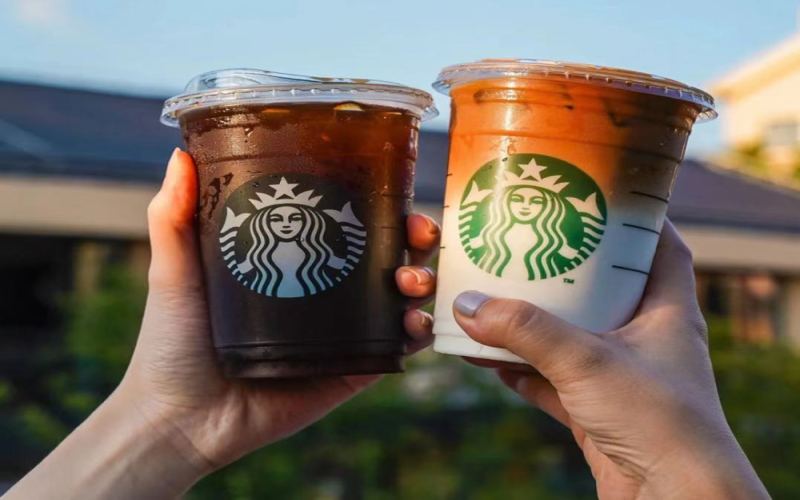
First Time at Starbucks: How to Choose? A Guide to Ordering Ten Popular Coffee Drinks and Flavor Analysis
Walking into Starbucks for the first time, it's only natural to feel a bit overwhelmed by the dense, crowded menu. In fact, drinking coffee is meant to be a relaxed, everyday affair—there's no need to get too nervous. Just choose according to your own taste preferences. This article divides Starbucks' popular drinks into two main categories: those with coffee and those without, introducing one by one the flavor characteristics of the coffee series—Americano, Latte, Flat White, Caramel Macchiato, Vanilla Sweet Cream Cold Brew, and more—as well as pairing ideas for the non-coffee series, including Black Tea Latte, Matcha Latte, Iced Shaken Fruit Tea, and Frappuccino. Whether you want to wake up and refresh your mind, control calories, or simply prefer milky or fruity flavors, you'll be able to find the cup that suits you in this list and easily avoid the pitfalls of ordering. [more…]
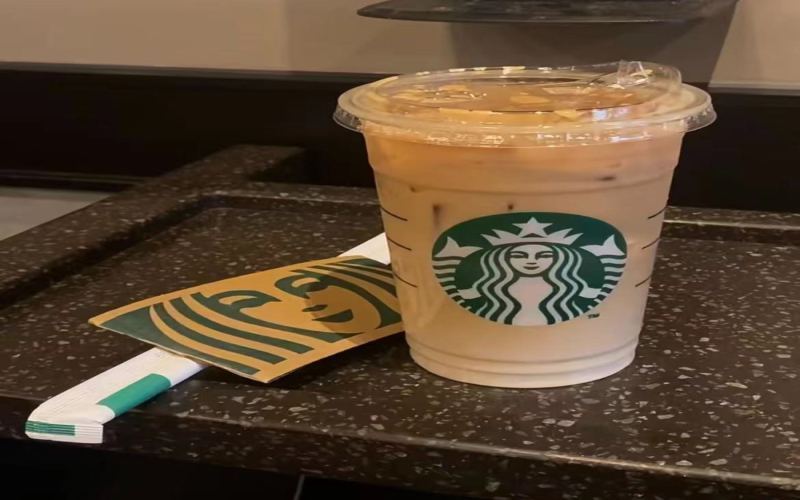
Top Five Most Popular Starbucks Coffees and a 2023 Price Reference for the Full Drink Lineup
Walking into Starbucks but hesitating over the menu? This article rounds up the five most popular drinks among customers right now, including the Oat Latte, Iced Americano, Cold Brew, plus the caffeine-free Matcha Frappuccino and Iced Shaken Berry Hibiscus Tea, explaining each one's features and who it's best suited for. It also includes the 2023 price list for Starbucks' four major series—Handcrafted Espresso, Frappuccino, Teavana, and Cold Brew—covering full pricing from Tall to Grande and Venti, so you can quickly decide based on your budget and taste. Whether you're lactose intolerant, cutting sugar to lose weight, or simply want to try something different, you'll find your next cup here. [more…]
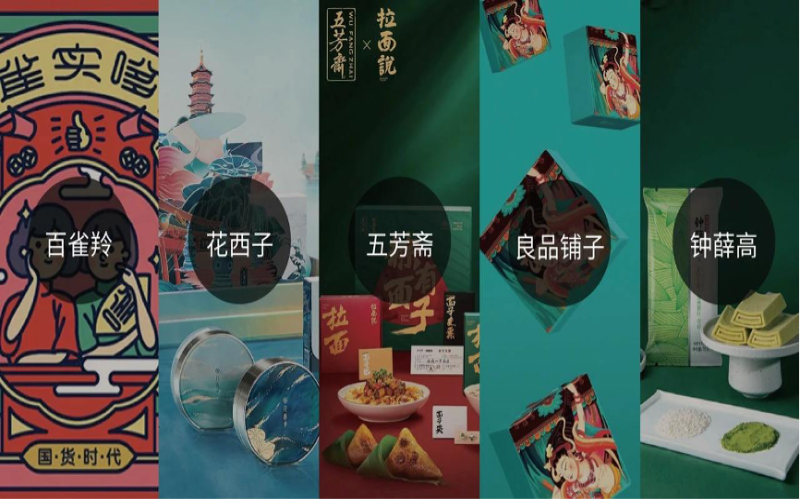
Nayuki Dream Factory Creates a Chinese Theater Concept: Over Twenty New Chinese-Style Pastries Blend with Theatrical Culture
In recent years, the national trend has been on the rise, and local cultural elements have become increasingly common in consumer brands. As a leading brand in the new-style tea beverage sector, Nayuki has abandoned its former Japanese-leaning brand image and transformed Nayuki Dream Factory into an opera space full of Chinese charm, launching more than 20 new Chinese-style pastries represented by mochi and palmiers, with each product corresponding to a classic opera such as The Drunken Concubine, The Peony Pavilion, and Farewell My Concubine. The store also displays traditional theater merchandise such as covered bowls and folding fans, creating an atmosphere of stepping into a traditional opera garden. Previously, Heytea also launched Axi Teahouse incorporating Sichuan opera elements. Against the backdrop of widespread price increases in the tea beverage industry, Heytea attracted market attention with a low price of nine yuan, and whether Nayuki's move into the national-trend pastry track can break through is worth continued attention. [more…]